English
 Français

- -8.69%
- -8.69%
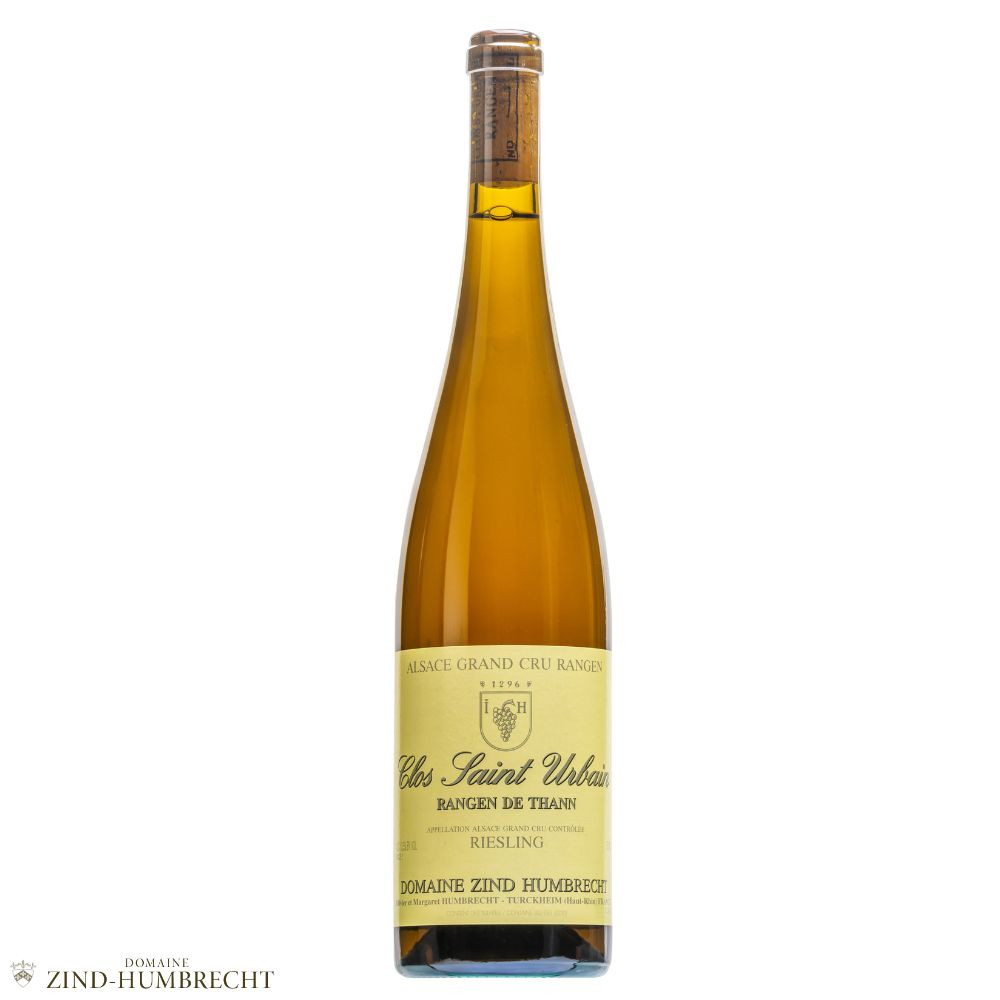
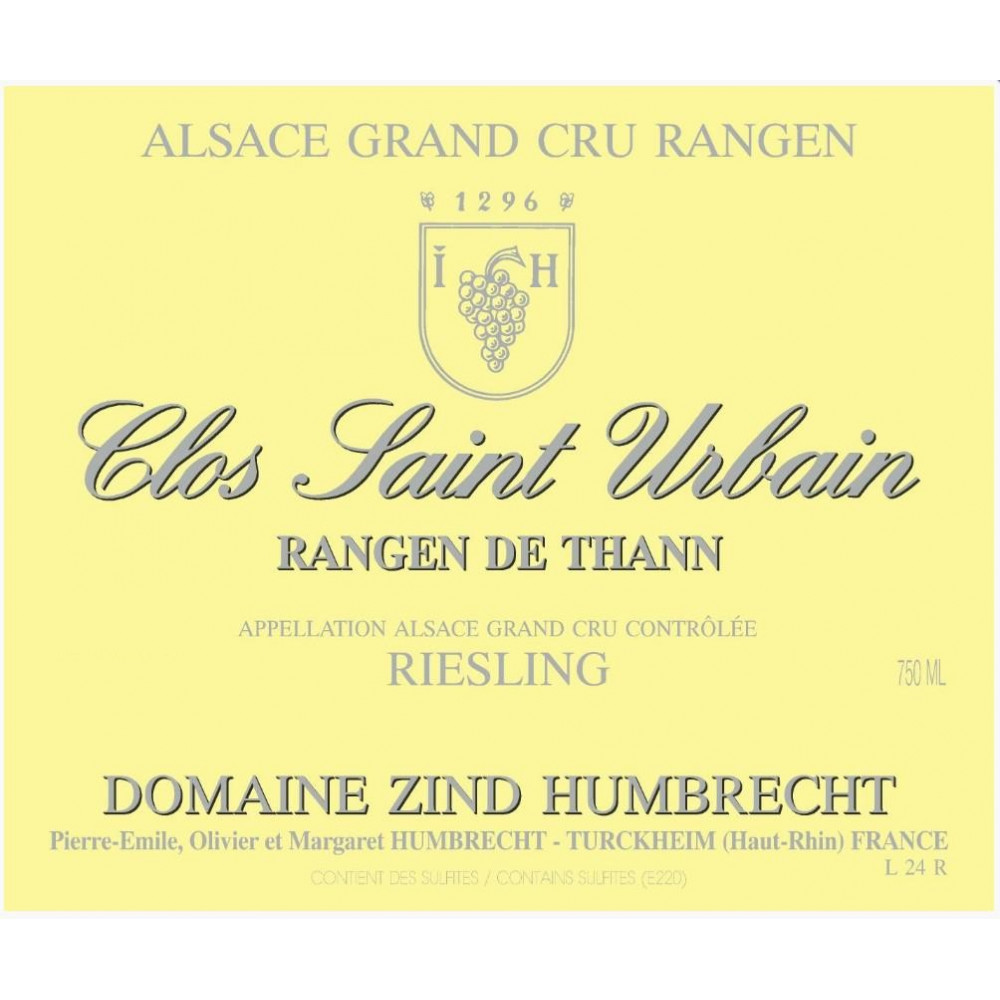
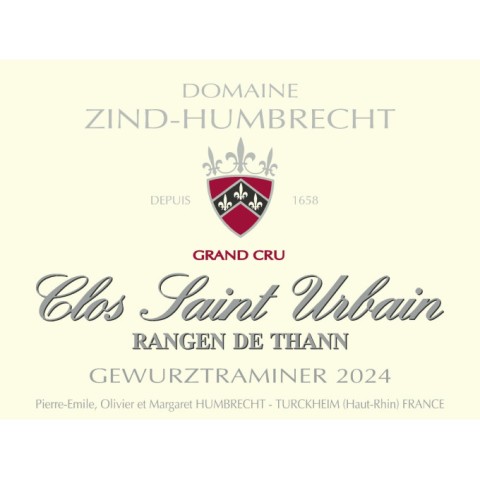
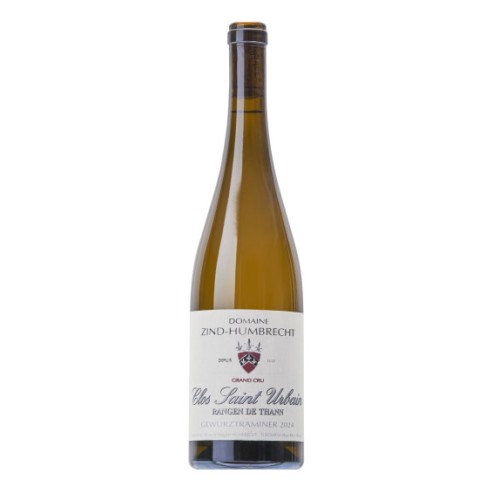
The ultimate of domaine, perhaps one of the greatest white wines in the world? Favorite and 99/100 RVF!
€105.01 / bouteille
 Everything is in stock
 Advice by phone or by email
 Delivery in continental France 20 €, free for orders over 400 €
PRESENTATION OF THE DOMAINE ZIND-HUMBRECHT
+ ALL HIS OTHER CUVÉES IN STOCK
Comments on this
Guide RVF of the Best Wines of France 2026 (sept 2025) : Heartthrob and 99/100. . The trilogy of Rangen reaches the sublime: the riesling is almost hypnotic in its aromatic intensity, creamy in its fruit maturity, soothing and caressing in the finish.
from the winemaker Olivier Humbrecht (January 2025):
Light golden yellow color. Like previous vintages, the Rangen stands out with a deeper hue than other terroirs. The nose is intense and amplifies with aeration. Initially, there is a strong trace of the volcano, with a typical slight reduction. The nose then evolves into a stony, smoky bouquet, with floral notes and aromatic herbs... The palate is enveloping, coating the mouth and revealing a silky texture. Long saline finish. This wine is primarily built on a saline mineral texture that deserves some aging to fully reveal itself.
Technical sheet written by the domaine
Description : The topography of this Grand Cru is impressive. It is a terroir where vineyard work is hard and laborious, and one can truly speak of heroic viticulture. But aside from its average slope of 90% facing full south, this terroir is especially distinguished by a soil composed of a volcanic-sedimentary rock that strongly influences the wines produced from it. Volcanic terroirs are rare, and this one is particularly uncommon, unique in fact among the Grand Crus in Alsace. The Rangen produces powerful, intense wines, marked by the influence of a late climate on a very sunny geology and location. The sedimentary volcanic rock is hard, breaking into breccias and angular stones, ultimately leading to the production of clays that will migrate into deep faults. This mineral richness marks the wines of the Rangen, both in terms of aromas and the very saline mouthfeel. The 2023 vintage is late on the Rangen, despite strong sunshine. The wines will have taken almost a year to finish dry. The aging of 16 months on total lees was necessary to refine this wine from a great terroir.
Bottling: January 2025
Acquired alcohol: 12.8°
Residual sugar: 1.3 g/l
Total acidity: 3.6 g/l H2SO4 (5.5 g/l Tartaric)
3.3
Yield: 25 hl/ha
Tasting optimum: 2026-2047+
Average age of the vines: 61 years old
Terroir: Volcanic (tuffs & grauwackes), south-facing, very steep slope
The entire history of this mythical Clos written by the domaine Zind Humbrecht
The Rangen has been classifiedGrand CruIn 1983 and obtained the status of Appellation Rangen Grand Cru in 2011, with a decrease in the appellation's yield (maximum) to 50hl/ha in 2012.
HIS TERROIR
The soil of this renowned terroir is a very particular and absolutely unique terrain in Alsace. Of Carboniferous age (Devonian), it is composed of volcanic rocks and sediments that are generally sandy, in which volcanic elements are more or less abundant. The stones that cover it come from hard rocks such as grauwackes, volcanic tuffs, and a flow rock that is a brown micaceous andesite. This layer has a variable thickness between 40 and 60 cm above the fractured bedrock, allowing roots to penetrate to a greater depth and promoting exceptional natural drainage.
The nature of the terrain and the depth of the soil characterize a lean environment, low in clay, but still present and characterized by a high exchange surface, thus favorable for good preservation of minerals. The dark color of the soil, a reddish-brown hue, is a favorable element for achieving higher soil temperatures.
The south-facing exposure increases the direct sunlight hours and places the vine in a privileged position on the steep slope of Rangen (90% on average), which necessitated the choice of a terraced cultivation method. Rangen is a late terroir due to its altitude (350m to 450m) and higher rainfall (750mm), but its exceptional exposure allows for a slow maturation of the grapes in October and November, where it is then possible to achieve very high levels of concentration.
Spring is often colder and rainier than in other earlier terroirs.
In summer, the soil of Rangen becomes a solar oven, providing the vines with all the necessary light energy.
Autumn is bright and warm, as once the morning mists disperse, the Rangen emerges in full sunlight, often above the humidity of the Alsace plain. Its exceptional exposure allows for a slow maturation of the grapes in October and November, where it is then possible to achieve very high levels of concentration.
HIS GRAPE VARIETIES
The late character of Rangen makes it a particularly favorable terroir for achieving great physiological maturity, which is very important for the maturity of a grape variety like theRiesling. Despite a very sunny topography (steep slope of 90%, south-facing exposure, warm soil), the evolution of the grapes is slow and the harvests are often late (2 to 3 weeks after the start of the harvest). The warm, well-drained, acidic soil is particularly favorable to theRieslingAnd, surprisingly, at the
Pinot Gris
, a grape variety that is often more comfortable on limestone terroirs. The adaptation ofPinot Gris is a versatile white grape variety known for its rich flavors and aromatic profile.
at Rangen is also conditioned by the ability of this terroir to produce very low yields without the winemaker having to artificially reduce the quantity of grapes (green harvesting). The poverty of the topsoil layers and the low organic matter content of the soils impose a denser cultivation (10,000 vines/ha at Rangen for the Domaine Zind-Humbrecht). ThePinot Gris
Being a grape variety particularly sensitive to excess production, it finds an exceptional terroir in Rangen. The volcanic rock imparts an aromatic touch and a unique personality to the wines that are produced from Rangen. Both theRieslingWhat thePinot Gris
Are strongly marked by the imprint of the terroir. The flint and smoky character of the terroir enhances the mineral character of theRieslingAnd the smoky aromas ofPinot Gris
. TheGewurztraminerIs rarer because, with the exception of the vines close to the river or at the bottom of the Rangen, most of the Rangen is subjected to cold winds from the valley that can harm this grape variety, hindering flowering (shatter) or preventing its ripening. Despite this, thegewurztraminerPlanted on the Rangen are capable of fully expressing the signature of the volcanic rock.The exceptionally steep topography of the Rangen vineyard requires a specific and highly labor-intensive approach.
AN ISOLATED VINEYARD !
The Grand Cru du Rangen is actually isolated from the rest of the Alsace vineyard. Located at the beginning of the southern end of the wine route, it is indeed quite far from the rest of the Alsace vineyard.
The industrial growth and development of the town of Thann have actually reduced an important vineyard (approximately 500 hectares at the time of Montaigne) to just the size of the Grand Cru today.
The Grand Cru itself is surrounded by the Thur River at the bottom of the slope and by heathlands and woods on the sides and above. This unique location ensures proximity to a rich ecosystem and great biological diversity.
The vines located on the Grand Cru du Rangen produce low yields. Despite a high density per hectare, the average production is often well below 30hl/ha, frequently ranging between 15hl and 25hl/ha in years of low production (2012, 2010…). It was by observing this low production, directly linked to the poor soil, that all the producers of Rangen decided to adopt a maximum yield of 50hl/ha in the charter of 1993, which was ultimately accepted in the annual production conditions in the specifications of GC in 2012.
THE WORK OF THE VINEYARD
On the Rangen, we find denser vines, with narrower rows and/or closely planted vines. These vines are also much closer to the ground, benefiting from the slope's effect and the warming of the stones. This is important, as the Rangen, a late terroir, requires this heat input at the end of the season to perfect the ripeness of the grapes.
This terroir is also complicated to maintain. Erosion can be significant, and the consequences are dramatic when rains wash soil down from the vines. The vineyard is also strewn with dry stone walls, which do not have a permanent lifespan, and unfortunately, every year we have to repair many walls.
A priori, due to its altitude and cooler climate, Rangen is rather susceptible to powdery mildew attacks, which can be quite formidable in certain vintages. However, in some warmer years, especially recently, downy mildew has developed intensely, requiring increased vigilance from the winemaker. The cool winds from the valley and the altitude of this Cru help to avoid significant problems, as the protection of this vineyard is very challenging. The use of tractor-mounted sprayers being impossible, all treatments are done manually using a long hose that is unrolled through the rows of vines.
Botrytis is not a major issue at Rangen (it should not be overlooked, however), especially when it is sought after at the end of the season for late harvests or selections of Grains nobles, a great specialty of this Cru.
The cultivation of the vine is done with the help of a winch for soil maintenance. Biodynamic farming, of course, prohibits herbicides, and since competition from weeds can be a problem in this poor soil, it is imperative to carry out at least two mechanical tillages each year.
THE SEASONS OF RANGEN
The proximity of the Vosges massif, the higher altitude of Rangen compared to the rest of Alsace (350m to 450m), and a greater rainfall (750mm/year) enhance the character of the seasons.
Winter is well established, but the snow can melt very quickly, and the Clos, thanks to the presence of the river, the soil covered with rocks, and a remarkable slope facing south, is almost sheltered from winter and spring frosts.
Spring is often colder and rainier, accentuating the late character of this terroir and delaying veraison and flowering often more than 15 days after the earliest climates in Alsace.
Summer brings great heat, especially when cloud cover is low. The soil of Rangen becomes a solar oven, providing the vines with all the necessary light energy.
Autumn is bright and warm, as once the morning mists disperse, the Rangen emerges in full sunlight, above the humidity of the Alsace plain. It is at this moment, like a sprinter on the final straight, that the Rangen catches up and surpasses all other terroirs.
THE WINES OF RANGEN
The wines of Rangen are characterized by the late character of the terroir, its strong volcanic minerality, and its ability to capture light. The wines of Rangen exhibit great depth and strength that affirm their personality.
Despite a high planting density, average yields are very low, often ranging between 25 and 35hl/ha in a normal year, and even much lower for sweet/liqueur wines. This imparts intensity and power to the wines of Rangen.
The very sunny exposure (slope, orientation, river, soil reflection) provides an energy of light and warmth to the soil and the vine, ensuring good foliar and root activity. All the wines from Rangen exhibit a strong physiological maturity and therefore balances based on saline maturity.
The very unique soil and subsoil, both due to its volcanic composition, highly mineralized, and its structure, allowing deep root penetration and natural drainage, imparts strength of flavor to the wines. They are characterized by a flinty, smoky, even peaty character and a highly mineral acidity (with a briny taste) stemming from the mineral richness of the soil. The wines of Rangen are easily distinguishable in tasting.
The topography of the site, its late character (hot/cold alternations), as well as the presence of the river are responsible, in certain vintages, for significant development of noble rot, which also allows for the production of great sweet wines, often very colorful, in addition to great dry wines. The Rangen is one of the rare terroirs in Alsace capable of imparting its strong flavor on all grape varieties.
However, they retain their own unique characteristics that do not necessarily require building the wine on the basis of a blend. Each grape variety expresses certain traits of the terroir in its own distinctive way. Blending is currently practiced at an experimental level and does not play a role in the construction of the Grand Cru.
Riesling is primarily harvested in very good condition and mainly produces dry, mineral wines. The Pinot Gris, which ripens earlier, accumulates sugars sooner and often develops noble rot in almost every vintage. It thus takes on a character of over-ripeness associated with the terroir's character. The Gewurztraminer, which is later at Rangen than the other grape varieties, also frequently develops botrytis and possesses a strong tannic structure.
The wines of Rangen are concentrated, long, deep, and possess great aging potential. The signature of Rangen showcases a harmony of acidity and salinity. In cases of over-ripeness, the dry extract and acidity will balance the residual sugars without the wine losing its terroir identity: the famous flint aromas will always be present.
Le Clos-Saint-Urbain
The town of Thann has always held a particularly deep reverence and devotion to this Saint. At the end of the 15th century, a chapel was erected in honor of Saint Urban in the heart of the Rangen vineyard. Each year, a procession would ascend there on Saint Urban's day, primarily attended by winemakers and innkeepers, along with other faithful participants. Along the route, the litany of Saints was sung, but with an additional litany specific to Saint Urban, known nowhere else but in Thann:
Saint Urbain, companion of work and helper of all the priests of the Lord's vineyard,
Pray for us !
Saint Urbain, guardian and protector of all vineyards and orchards,
Pray for us !
Saint Urbain, Patron of winemakers and innkeepers,
Pray for us !
Of drink and drunkenness,
Deliver us, Lord !
From the devastation of the storm and frost,
Deliver us, Lord !
This chapel was restored in 1774. During the French Revolution, it was completely destroyed by the people. Since 1934, a new chapel dedicated to Saint Urbain once again protects this wonderful hillside.
Le Clos-Saint-Urbain is centered around the Saint-Urbain chapel and consists of 5.5ha planted with Pinot Gris (2.7ha), Riesling (2.3ha), and Gewurztraminer (0.5ha), and is divided in the middle by the Montaigne path.
The Thur River flows at the foot of the vines only under the Clos and then moves away after passing the cliff.
Les Riesling and Pinot Gris are planted in different locations of the Clos, between the east and west and the top and bottom of the slope. The upper part, which is later ripening, cooler, and has a more stony and acidic soil (due to the natural leaching caused by the slope, the soil pH varies between 5.5 at the top and 7 at the bottom) produces grapes with more finesse and acidity. The lower part of the slope produces more structured, powerful, and rich wines. It is therefore very interesting to be able to blend the two parts of the Clos.
The Gewurztraminer is less present than the other two grape varieties because it is more sensitive to altitude. For this reason, it is found only on two plots directly overlooking the river. There, the soil richer in clay is conducive to this grape variety. Additionally, the river also creates a warming effect by reflecting sunlight and thermal currents.
Data sheet
Specific References
16 other products in the same category:
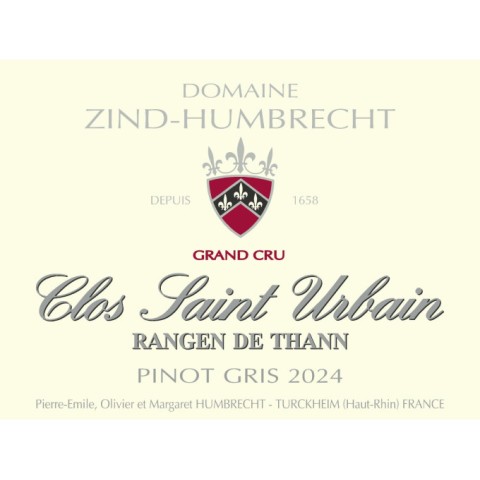
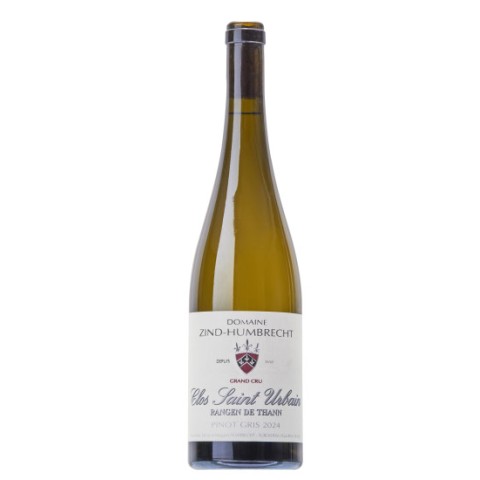
€103.00 / bouteille
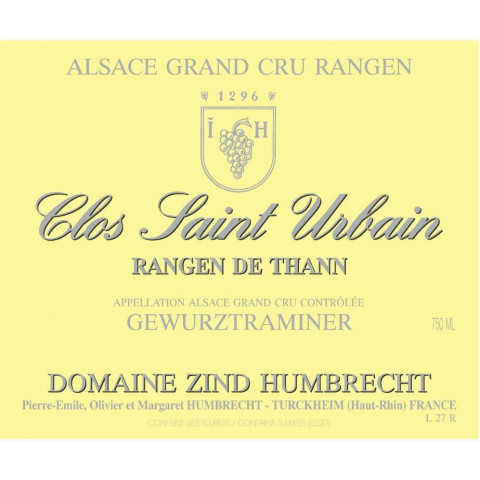
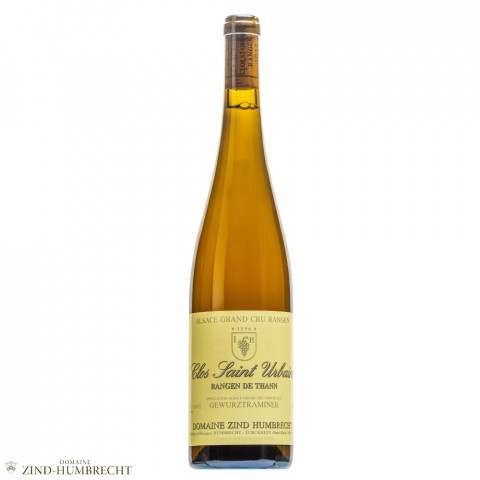
€115.00 / bouteille
€97.00 / bouteille
€103.50 / bouteille
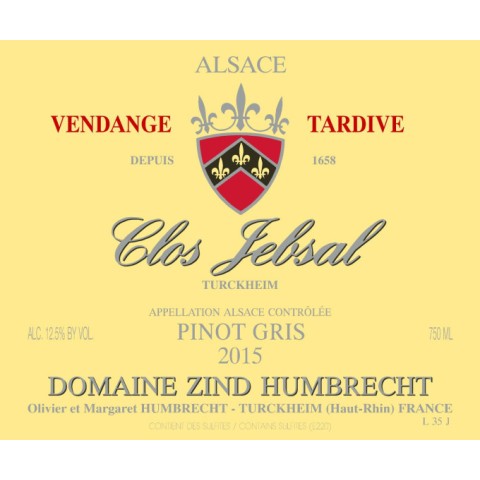
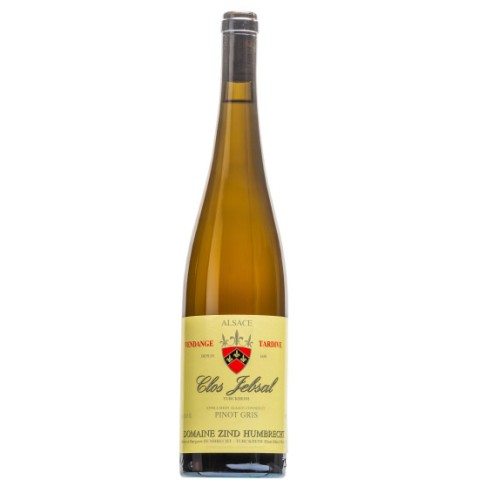
€69.00 / bouteille


€99.00 / bouteille
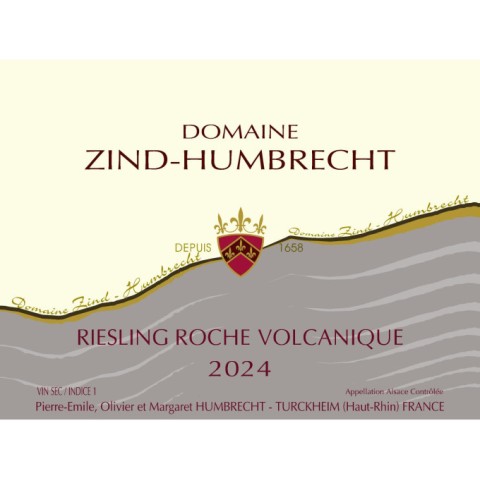
€29.00 / bouteille
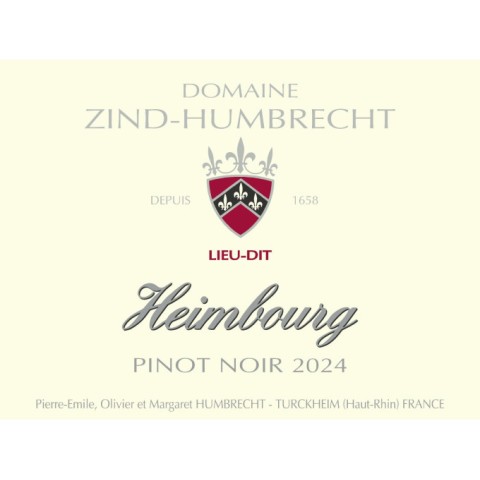
€56.00 / bouteille
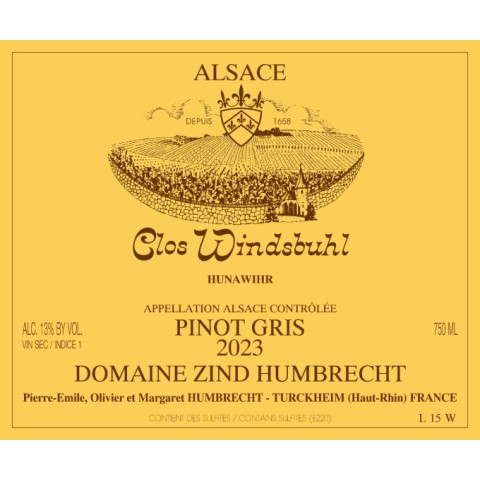
€74.00 / bouteille
€53.00 / bouteille
€31.00 / bouteille
€103.50 / bouteille
€29.00 / bouteille
€60.00 / bouteille
€29.00 / bouteille
€29.00 / bouteille