English
 Français

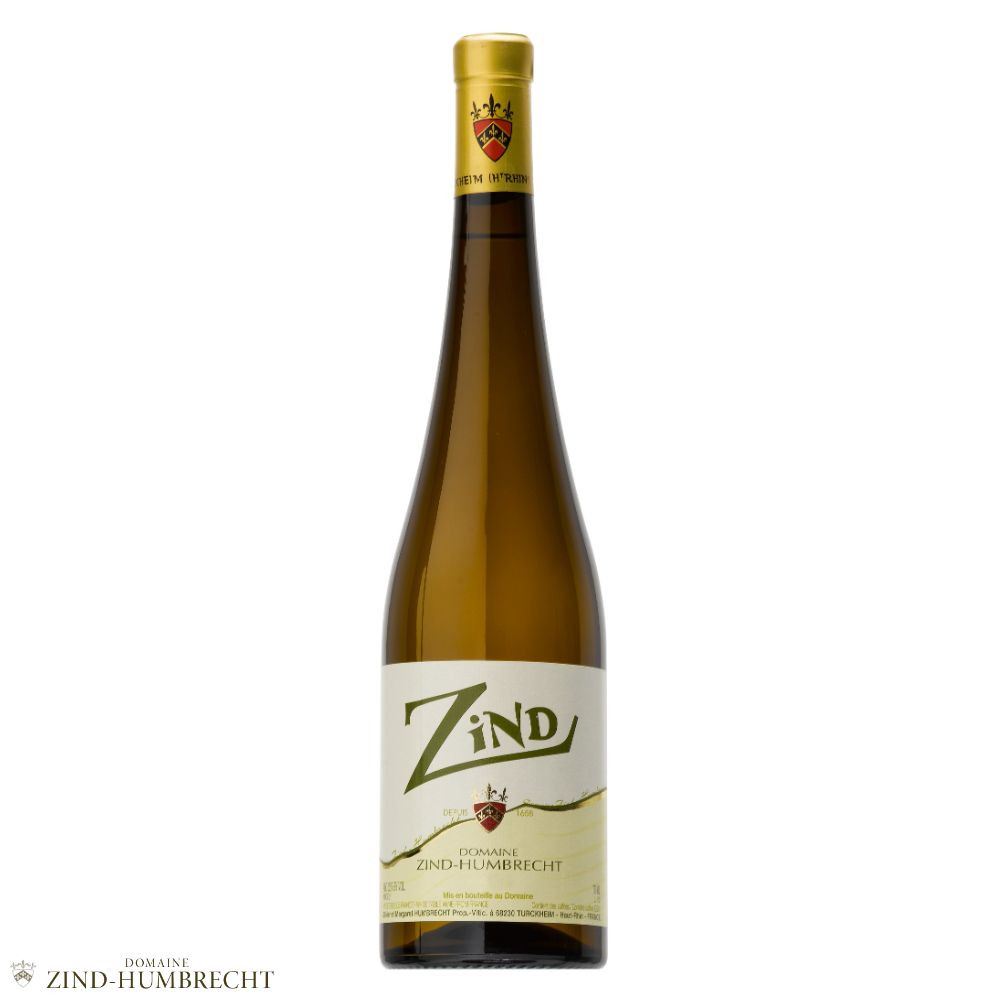
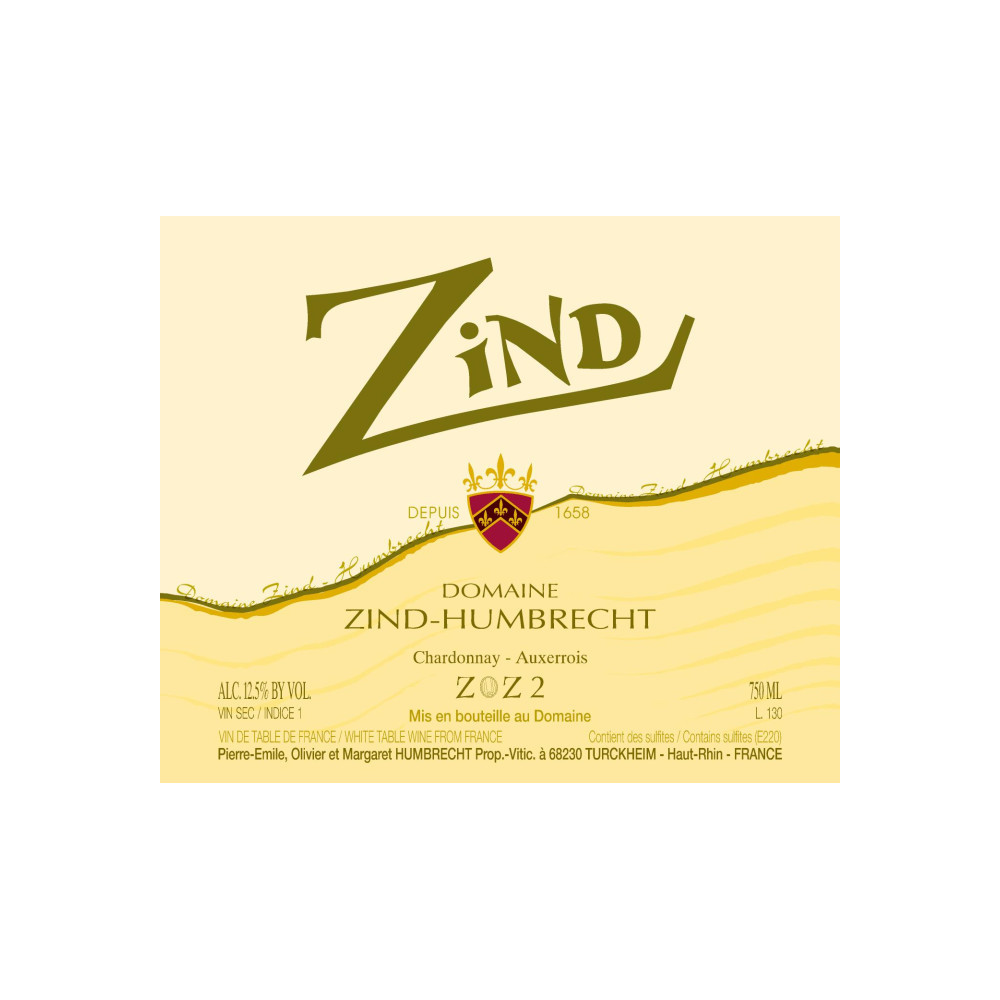
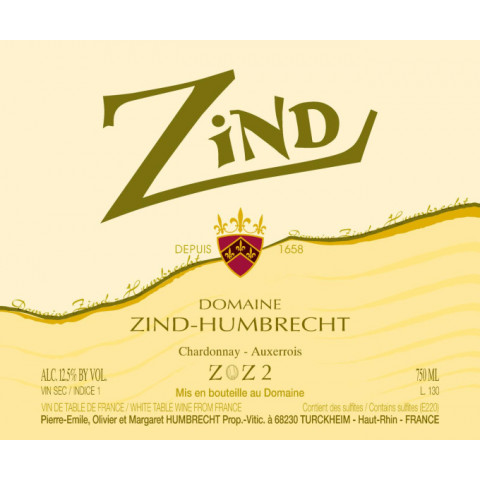
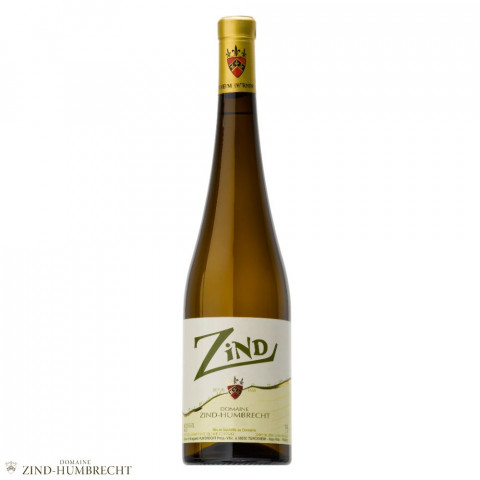
93/100 Reinhardt/Parker. A superb wine from Alsace, produced on the illustrious limestone terroir of Windsbuhl, resulting in astonishing freshness and liveliness. It is already very good in 2024 thanks to a masterful blend of two "extraordinary" grape varieties that complement each other ideally, chardonnay and auxerrois. Of course, it will be even better starting in 2025. One might hesitate to say it's the entry-level of the domaine!
€31.00 / bouteille
 Everything is in stock
 Advice by phone or by email
 Delivery in continental France 20 €, free for orders over 400 €
PRESENTATION OF DOMAINE ZIND-HUMBRECHT
+ ALL ITS OTHER WINES IN STOCK
Comments on this
Tasting comments from the domaine (January 2024): Pale yellow color. The nose is still discreet and reserved, typical of Windsbuhl in its youth. It expresses delicate aromas of citrus, fresh herbs, and is marked by aging on lees with toasted, hazelnut, and stone flavors. The palate is lively, elegant, harmonious with ripe acidity. The mineral backbone linked to the limestone of Windsbuhl is evident in this wine. The Zind 2022 also presents a youthful texture, needing more time to fully open up. It is a dry, structured, and promising wine..
Robert Parker's Wine Advocate (Stephan Reinhardt, February 2025): 93/100. From 33-year-old vines planted in the coolest part of the Clos Windsbuhl, which is located adjacent to the forest, the 2022 Chardonnay-Auxerrois Zind offers a deep, clear, fresh and elegantly aromatic nose of ripe and well-concentrated fruits, Muschelkalk limestone, herbs, salts and lemon juice. On the palate, this is a mouth-filling, refined and stimulating mineral white with a dense and even rich texture and a long, intense and complex structured finish with fine tannins and stimulating salinity. The wine is as rich and powerful as it is stimulatingly juicy and elegant, provided with fine tannins that are perfectly wrapped by the concentrated and generous fruit texture. This is a great Windsbuhl, yet since it's also Chardonnay without bubbles, it has to be marketed as Vin de France. The 2022 will improve greatly with time, although it's already irresistible. 12.5% stated alcohol. Natural cork. Tasted in November 2024. Drink date 2025-2050.
Technical sheet written by the domaine
Description: The Clos Windsbuhl was acquired by the Domaine Zind-Humbrecht at the end of 1987. We quickly realized that certain plots needed to be replanted to choose either a better-suited grape variety/rootstock combination and/or modify the planting density. The part of the Clos closest to the forest needed to be uprooted. Considering the possible options, we decided to choose grape varieties that ripen slightly earlier to compensate for the cooling influence of the nearby forest. Instead of the classic Auxerrois/Pinot Blanc combination, we replaced the latter with Chardonnay. Unfortunately, Chardonnay is not permitted for still wines in Alsace, so we must declassify this wine to Vin de France each year. Chardonnay is part of the Pinot family, but compared to Pinot Blanc, it can produce lower yields (with quality selections) and maintain good acidity on the limestone geology of Windsbuhl. In 2019, the production was actually quite low, so we also added a small percentage of Pinot Gris Windsbuhl to the blend that was able to ferment completely dry.
Bottling: August 2023
Acquired alcohol: 12.8°
Residual sugar: 2.7 g/l
Total acidity: 3.4 g/l H2SO4 (5.2 g/l Tartaric)
pH: 3.3
Yield: 50 hl/ha
Optimum tasting: 2024-2034+
Average age of vines: 33 years
Terroir: Muschelkalk limestone (Triassic)
Vintage 2022
2022 follows a stressful 2021 vintage for both the vines and the winemakers! The small harvest and ultimately better weather in August 2021 favored significant floral induction (the moment when the vine prepares for the upcoming year's fruiting – the leaf bud becomes fertile and bears the future cluster). It is therefore not surprising to see many clusters on the vines in spring 2022! There were some frost risks in early April, but temperatures did not drop low enough to cause problems in Alsace. Bud break was slow and stretched over the first three weeks of April. May and June were very dry and hot. The vines finally grew rapidly, and the first flowers were observed on Clos Jebsal around May 20, with flowering completed in early June in the later-maturing vineyards of Rangen and Clos Windsbuhl. The risk of disease was very low, although powdery mildew had to be monitored closely. By the end of May, signs of early water stress were observed. High temperatures and lack of water during flowering caused significant shatter and millerandage, particularly in the Riesling vineyards located on the gravelly terroirs of Turckheim. In these situations, the floral caps remained stuck together, and either the flower aborted or dried out. In a few weeks, a huge harvest potential turned into a small harvest in many vineyards! The vineyards of Wintzenheim (Hengst) benefited from some rain after June 20, but unfortunately accompanied by a small hailstorm. We were glad that only a small area had this problem (20% loss), but by the end of summer, we would have preferred to have this rain and small hail across all our vineyards. The lack of water in 2022 was more damaging than a small hailstorm! July was also hot and dry. The first grapes began their veraison (changing color) around July 14 (still at Clos Jebsal). Some rain (Brand) at the end of July was welcome but not really sufficient to prepare the vines for a very hot first half of August (temperatures between 35 and 38°C). Finally, significant rain brought all the necessary water to the granite soils of Brand, Sommerberg, and Wineck-Schlossberg in mid-August, but with significant hail damage, mainly in the villages of Niedermorschwihr and Katzenthal. Only the Grand Cru Brand in the central and western part was fortunate enough to receive water with almost no hail damage. Unfortunately, again, the vines on the gravels of Turckheim received no rain. In these vineyards, the berries stopped growing early and contained very little juice. The harvest began early on August 22. To be able to harvest on short days (finishing before it got too hot in the afternoon) and not to harvest certain plots overripe, we sometimes employed up to 100 people in the vineyards. Most of the vineyards were harvested during the first half of September. We finished the harvest with richer Gewurztraminer grapes on September 20. The granite soils ripened very quickly, and, except for Sommerberg and Wineck-Schlossberg, the harvest volume is satisfactory. The limestone soils also performed very well. They were not affected by water stress, and the berries/foliage developed very well. The terroir of Herrenweg/Roche Roulée/Turckheim suffered the most from the heat and lack of water. 2022 would have been a difficult vintage for botrytized late harvest wines. When ripeness is so early in dry conditions, botrytis does not develop easily, and if it does, the risk of grey rot is high, which was the case in 2022. Water stress, unlike in 2021, also slowed soil activity. The wines of 2022 had a much lower nitrogen content, resulting in very complicated fermentation finishes. The cellar team worked hard in spring 2023, constantly restarting fermentations from the yeast selections in the cellar. This allowed all the wines intended to be dry to complete their fermentations during the summer of 2023. The average yield in 2022 is 37.9 hl/ha (33 hl/ha Grand Crus and 38 hl/ha Alsace). All the wines are expressive and show an unsuspected elegance, resulting from a harmonious combination of minerals, good acidity, ripe tannins, and an absence of residual sugars where not needed. 2022 is a contrasting vintage that produced great wines on the finest terroirs of Alsace.
Data sheet
16 other products in the same category:
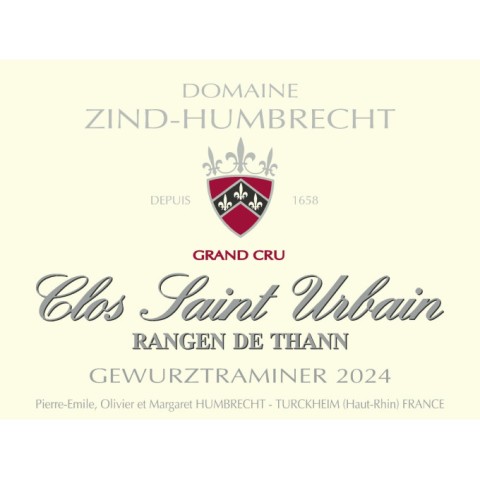
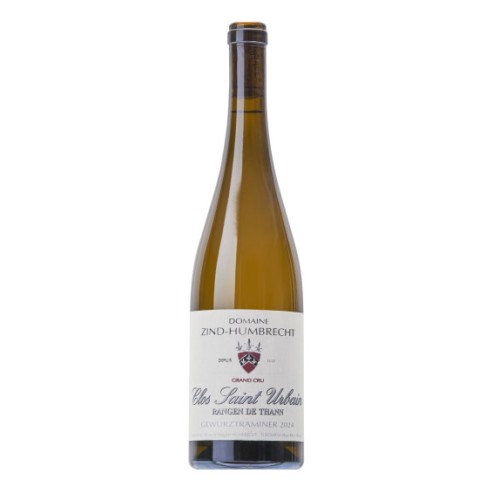
€103.50 / bouteille
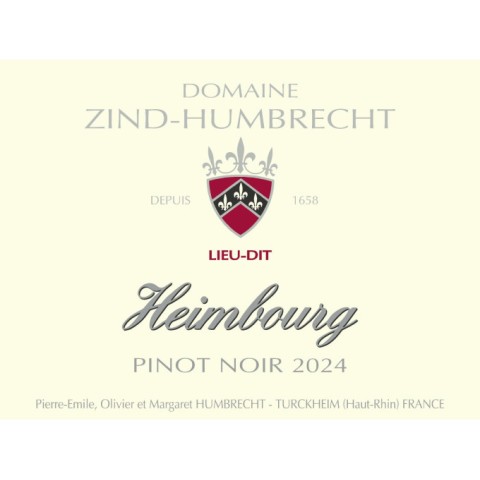
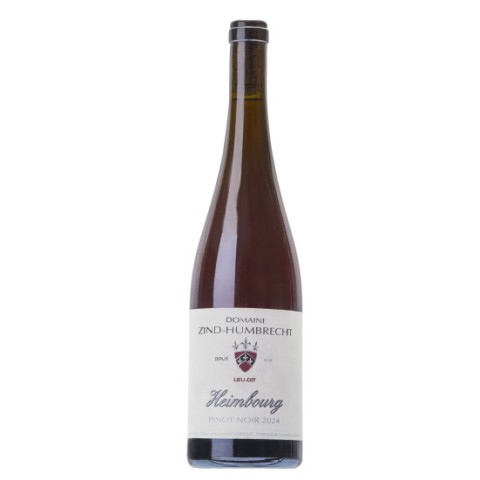
€56.00 / bouteille


€99.00 / bouteille
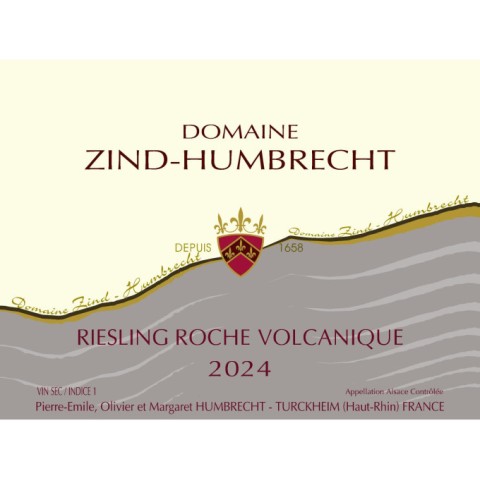
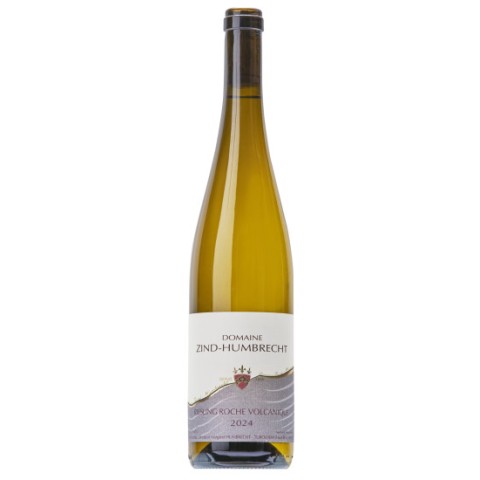
€29.00 / bouteille
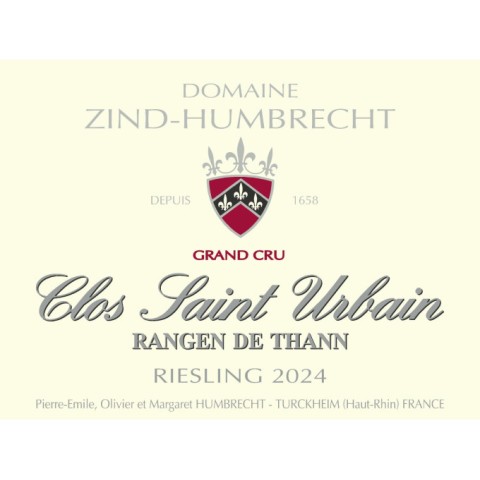
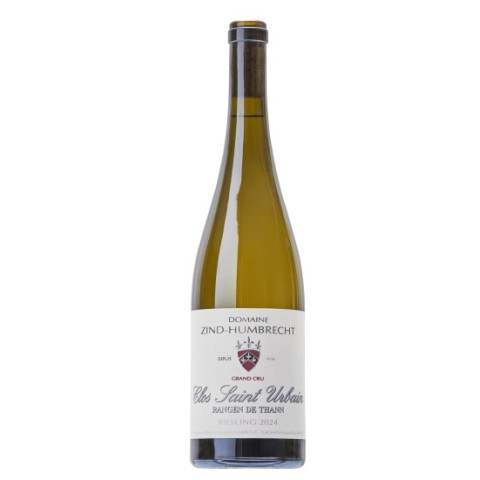
€103.50 / bouteille
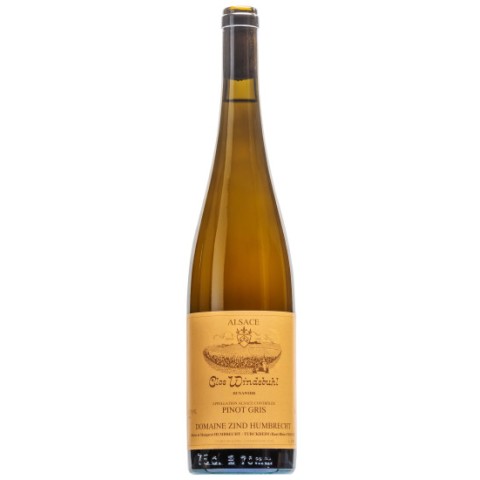
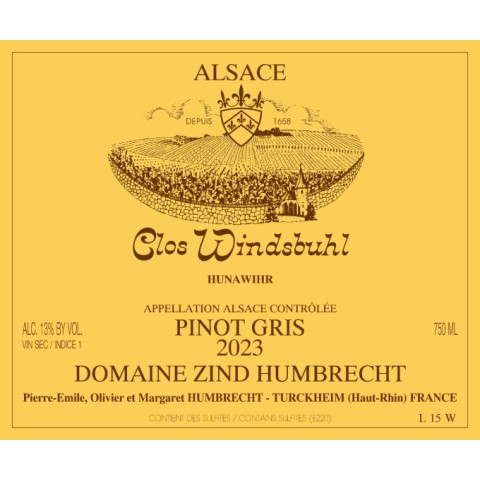
€74.00 / bouteille
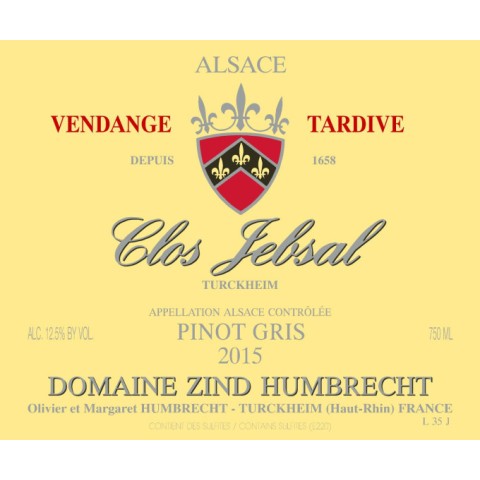
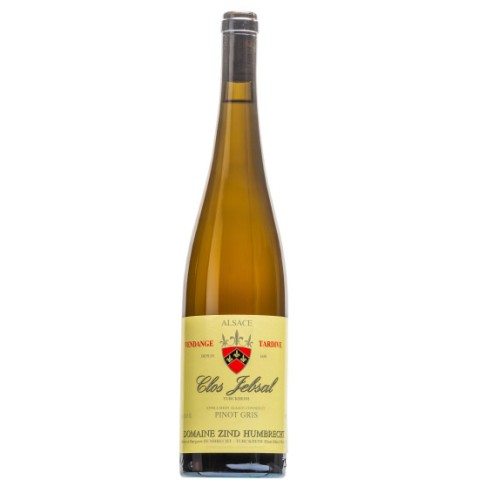
€69.00 / bouteille
€31.00 / bouteille
€29.00 / bouteille
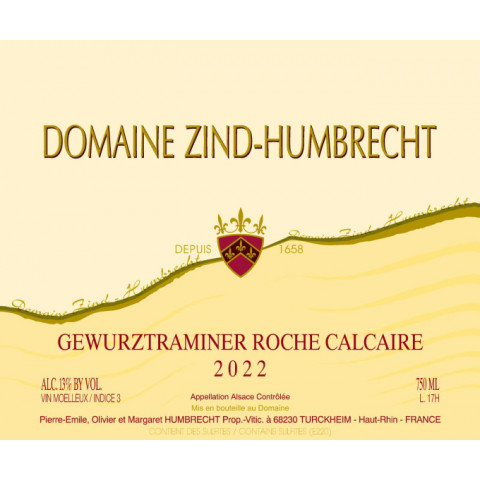
€29.00 / bouteille
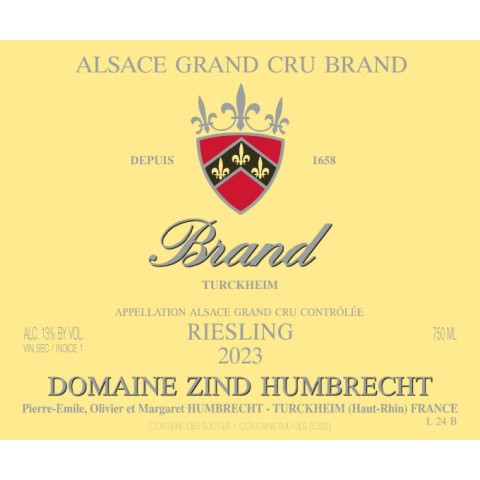
€97.00 / bouteille
€29.00 / bouteille
€53.00 / bouteille
€105.01 / bouteille
€88.00 / bouteille
€30.50 / bouteille