 English
 Français

€46.50
€15.50 / bouteille
€15.50 / bouteille
€10.62 / bouteille
€24.65 / bouteille
€31.00 / bouteille
€24.00 / bouteille
€13.00 / bouteille
The domaine Tempier is a wine estate in Bandol that produces red, rosé, and white wine. The Tempier wines are made from the grape varieties mourvèdre, grenache, cinsault, and syrah, available for online sale and home delivery.
This 38-hectare wine estate is managed by Daniel Ravier, who continually enhances it and continues the efforts initiated by the Peyraud family, the owners. Tempier consists of a mosaic of terroirs, the main ones being La Migoua, la Tourtine, Cabassaou, and La Bastide, all located on clay-limestone soils cultivated in terraces.
The Peyraud family has always practiced sustainable viticulture where the work of the vine and its terroirs is paramount. The warm and dry climate protects the vines from diseases, and Daniel Ravier adopted biodynamics in 2013. Soil work is traditional, without herbicides, to promote the microbial life of the soils. The winemaker believes that nature must maintain its own biological balance. The red wines contain a majority of mourvèdre, with grenache and cinsault completing the blend. The different plots are only harvested (manually, of course, for the first sorting of the grapes) when maturity is perfect. A second sorting is done at the entrance to the winery. The grapes are destemmed, crushed, and then sent to temperature-controlled tanks where fermentation starts naturally thanks to the indigenous flora. The wines then undergo malolactic fermentation and are neither fined nor filtered.
Tempier is one of the best (the best?) wine estates of the AOC Bandol. The wine of Bandol appeals to enthusiasts of the appellation, but also to lovers of mourvèdre, the flagship grape of the AOP, as well as to those seeking long-aging reds and characterful rosés and whites.
The three colors of Bandol (red, white, rosé) adapt to various tasting occasions:
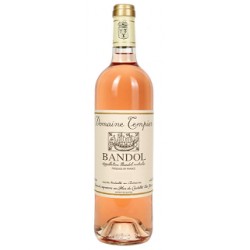
- For a first discovery purchase from the domaine Tempier, one can choose the rosé, which can age for several years (reasonably up to 5 years, sometimes more) in a good cellar to reveal all its complexity. Tempier rosé is not only suited to summer cuisine (great freshness and length on the palate) but also to exotic and spicy dishes in winter, especially older vintages.
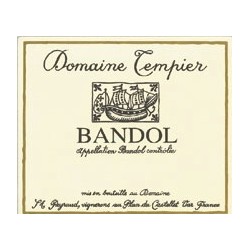
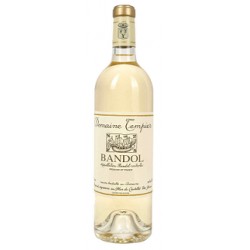
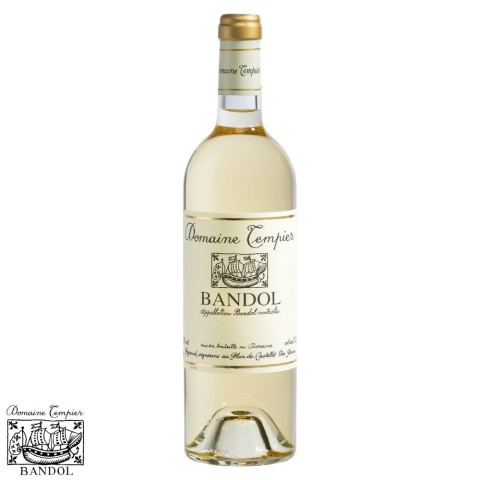
- The white is a floral and fruity wine, best enjoyed for its freshness and at the table. Like the rosé, Tempier is a favorite among sommeliers for its original food-wine pairings.
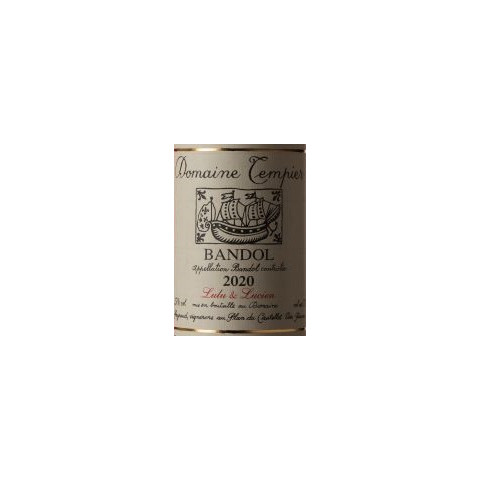
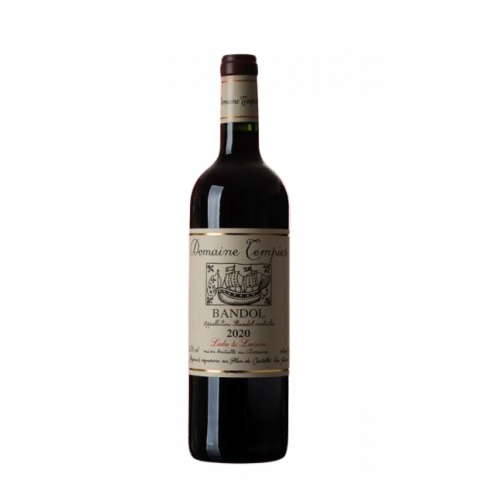
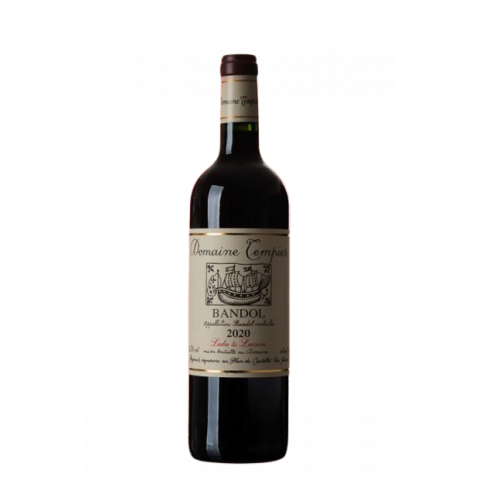
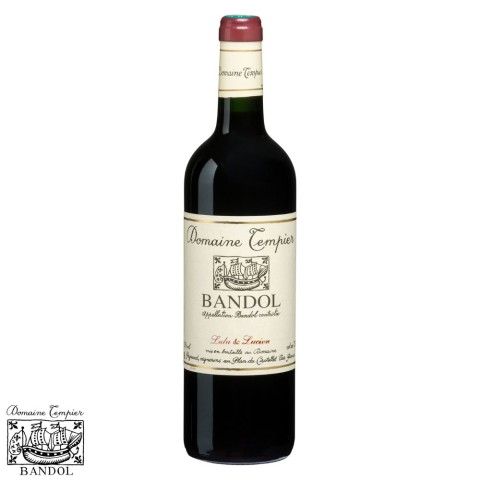
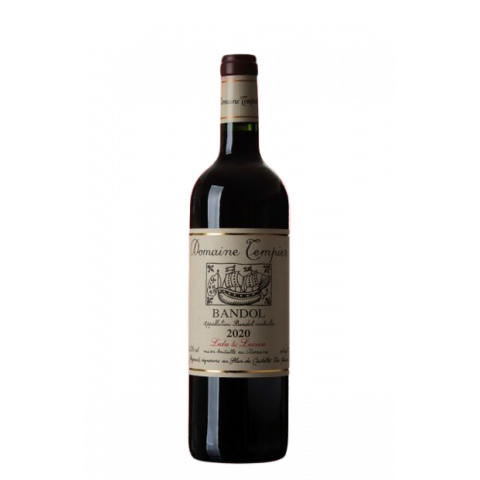
- As for the reds, the classic cuvée now named "Lulu et Lucien" (in homage to the ancestors of the family who revived the domaine in the 20th century) gives a fairly precise idea of the ultra-quality approach of the domaine, and maintains an "easy" profile for medium-term tasting, focused on ripe fruit.
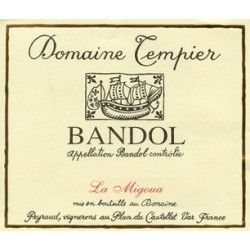
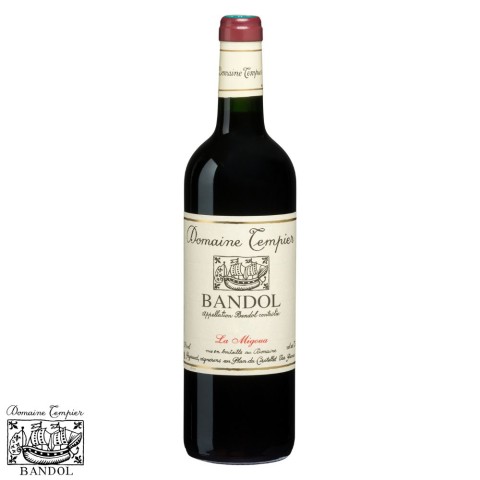
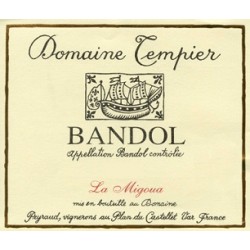
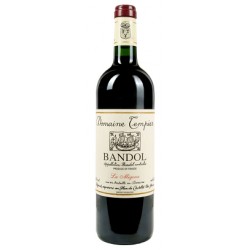
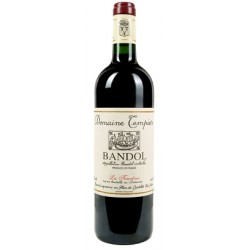
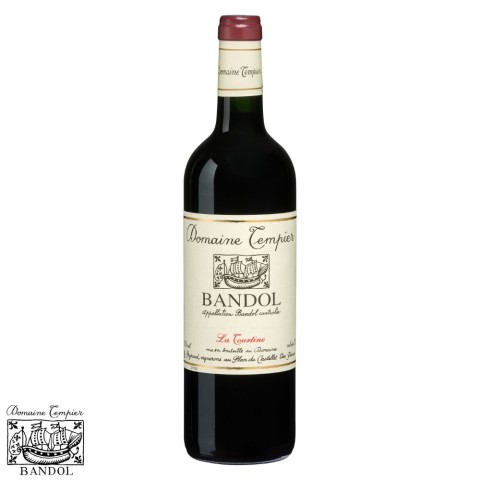
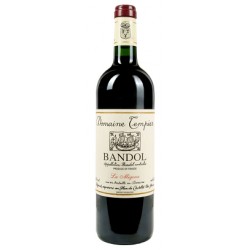
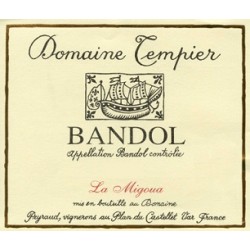
- The great parcel reds cuvées Cabassaou (the rarest cuvée), La Migoua (the most robust), and La Tourtine (the most accessible) are produced in tiny quantities, with intentionally very low yields given the advanced age of the vines and the drastic selection of the berries.
The new vintages are often sold out very quickly, and we cannot restock, as everyone wants them! When we are lucky enough to obtain some, we understand what a great mourvèdre raised on an ideal terroir is, especially if tasted 10 to 20 years after the harvest.
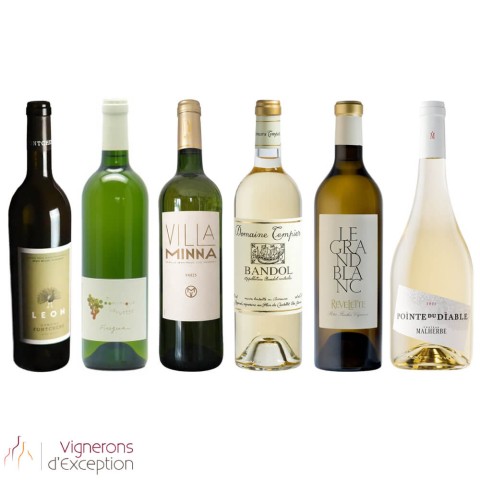
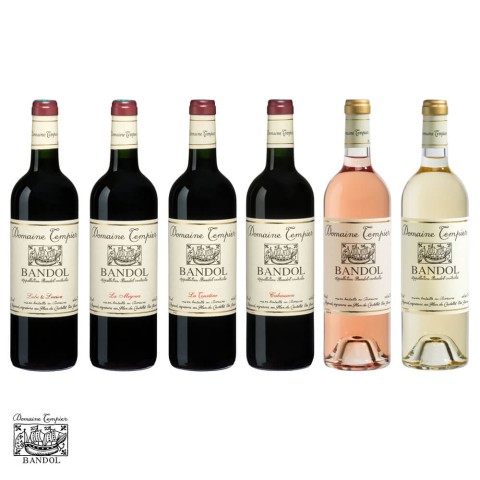
Our selection of wines from the domaine Tempier:
The reds must come from vines over 7 years old and be composed of at least 50% mourvèdre, with a yield of less than 40 hl/ha. They must be aged in barrels for a minimum of 18 months. These constraints ensure the production of powerful, high-end reds with very long aging potential.
The whites are dry and composed of 50% clairette grape. The aromas are floral, and the color is deep, especially after a few years of aging in the cellar (maximum 5 years).
The rosés are vinified by bleeding (as opposed to blended rosés, which are less prestigious). They are made up of 20% mourvèdre grape, which gives them a sturdier structure than other Provençal rosés, and of course, a unique aging capacity of sometimes 10 years!
In AOP Bandol, you must also discover the DOMAINE DE TERREBRUNE, another must-see star of the appellation!
The different cuvées, whether white, rosé, or red, are particularly representative of the terroir where they were crafted. The soil, but also the climate, always with an appropriate aging for the grapes contained in the barrel, often predominantly mourvèdre. Generally, the red wines are quite warm and powerful, enjoyed between 4 and 15 years (around 5-10 years, tertiary notes appear such as underbrush, tobacco, leather). In their youth, the reds have aromas of spices, garrigue, and ripe fruits (even compoted after a few years). The great vintages stand out for their freshness and softness as well, with rolling and velvety tannins in a balance with the alcohol that impresses, especially in the three parcel cuvées of reds that have contributed to the international fame of the Domaine Tempier.
The whites and rosés are more accessible with this complex character of great gastronomic wines. The winemaker recommends enjoying them within the first 5 years, but notes that many enthusiasts appreciate the tertiary aromas (honey, etc.) that later appear in the whites!
The red wines from the domaine Tempier are enjoyed at 16-17°C, and depending on their age, the younger they are, the more it is advisable to decant them to allow them to breathe. They pair easily with Mediterranean cuisine, even slightly spicy, and all meats (especially game), whether grilled or stewed.
The whites and rosés are served chilled, but not excessively so as not to mask the finesse of their aromas, around 8-10°C. Some even prefer them at 12-14°C, especially the slightly older vintages. They pair well with grilled fish, all seafood, poultry in sauce, and all types of cheese (especially goat cheese).
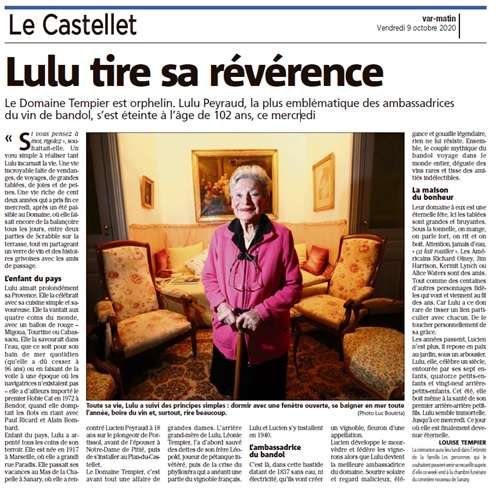
It is said that the Phocaeans planted the vines in the region, around 500 years before Christ. Much later, the Romans already used the port of Bandol to export the wines that took its name (which also inspired the creator of the label of the domaine Tempier). The domaine Tempier already existed in the 18th century, but it was only in 1834 that the bastide was built. The wines of Tempier won their first gold medal in 1885. Decimated by phylloxera like almost the entire European vineyard, the vines were replanted on rootstocks towards the end of the 19th century, under the guidance of Léonie Tempier, great-grandmother of Lucie Peyraud, the last representative of the family in charge of the domaine who passed away in 2020 at the age of 103. The cellar is filled with oak foudres, as well as cement tanks.
- In the early 20th century, it was an economic crisis for the entire local wine production, and the vines were uprooted in favor of orchards. The 1929 crisis dealt another blow to the domaine, which was nearly abandoned until 1940, when Lucie Tempier married Lucien Peyraud, who wanted to become a winemaker. They settled at the domaine, and it is from this date that the myth of Tempier truly begins.
- 1941: The AOC Bandol is officially born by decree. The most noble local grape varieties are planted (mourvèdre, grenache, cinsault), and the first vintage of rosé is 1943. Lucien Peyraud is elected president of the Bandol Wine Syndicate and then becomes a member of the INAO in 1947. In this capacity, he encourages all nearby winemakers to plant the flagship grape of the AOC, mourvèdre. The first vintage of red wine is 1951, its label created by Alphonse Tempier, the father of Lucie Peyraud.
In the second half of the 20th century, the winemaker used the mourvèdre grape, so typical of his AOC Bandol, as the main promotional argument for his wines around the world: these are long-aging wines that can be classified alongside great Bordeaux, Côte-Rôtie, Burgundy, Hermitage, and Châteauneuf-du-Pape. Lucie Peyraud, whom everyone calls Lulu, a fine cook, not only had 7 children but was also a true ambassador of the domaine, presenting her wines to all the great French restaurants. She was also a recognized host, and her Provençal recipes contributed to the recognition of Tempier in the United States. The winemaker was even appointed to "l’Ordre des Dames du Vin et de la Table," created by two journalists from “Cuisine et Vins de France” and “La Revue des Vins de France.”
In the 1960s, the two sons François and Jean-Marie Peyraud arrived at the domaine respectively as head of cultivation and responsible for winemaking and marketing. They were the ones who isolated the plots of the lieux-dits la Tourtine, La Migoua, and Cabassaou to vinify them separately, inspired by the discovery of the different Climats of Burgundy. A new cellar was built in 1968 to optimize aging in foudres, which is so important for Bandol wines.
In 2000, François and Jean-Marie retired, and their children took over, although the operational management of the domaine is ensured by Daniel Ravier, still vigorous in 2026 ;-)
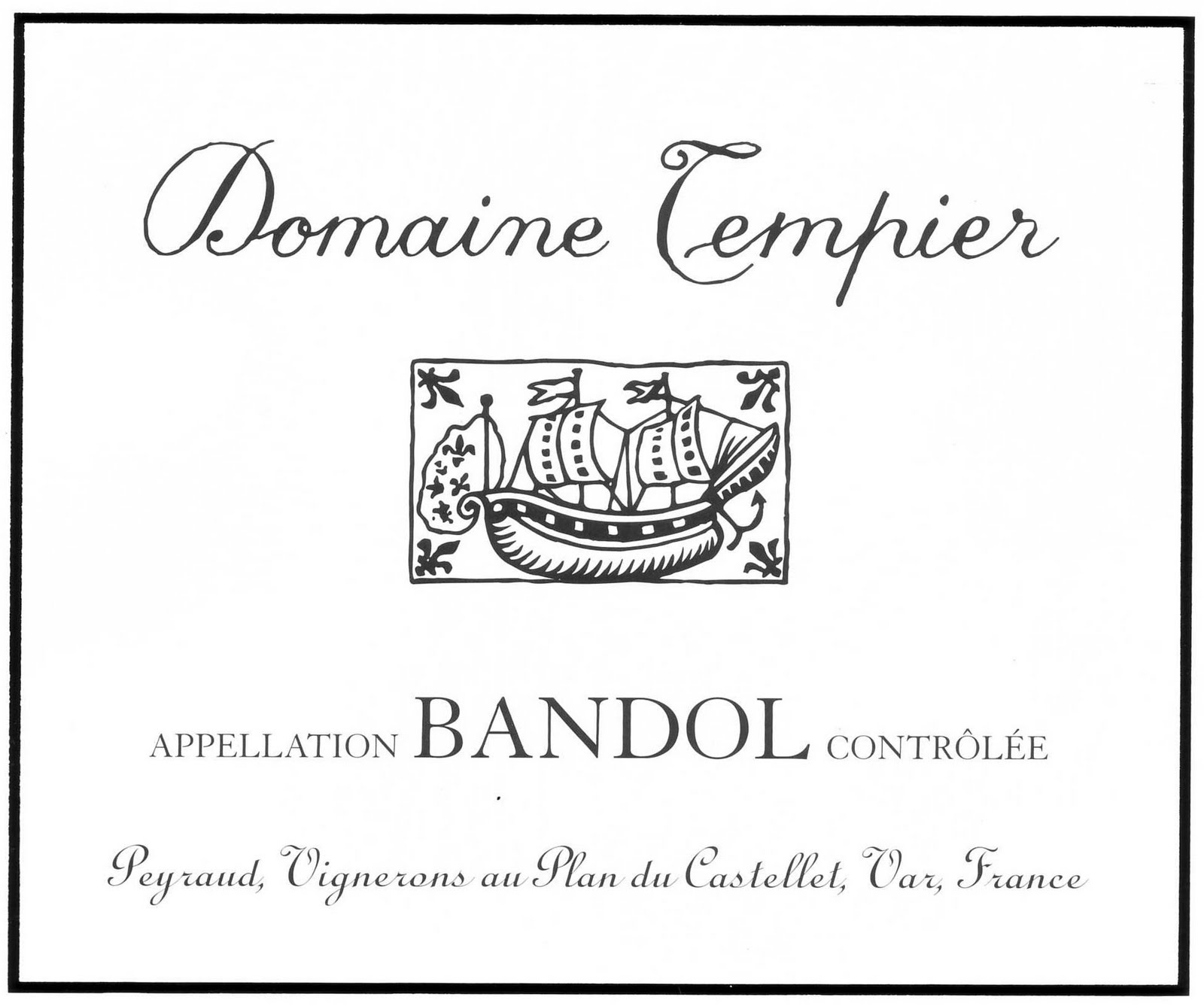
The label of the 2017 vintage features a discreet dedication "For Lulu", which celebrated the 100th birthday of the owner who passed away in October 2020.
"Lulu takes her bow" (Var-Matin, Oct 9, 2020)
RVF Guide to the Best Wines of France 2026: 3*/4 (The Excellence of the French Vineyard). Tempier is now the reference estate of the Bandol vineyard. Everything has been put in place by the Peyraud family to rise to the top of a regional and especially local hierarchy. Daniel Ravier, the current director of the domaine, has initiated this recovery. He has launched a significant investment program in the cellar, with a modern winemaking tool, followed by a complete renovation of the foudres park. Then, of course, he has paid particular attention to an exceptional wine heritage composed of very old vines of mourvèdre, carignan, cinsault, and grenache, which produce, among others, three famous cuvées. La Migoua (10 hectares in Beausset-Vieux, half of mourvèdre complemented by grenache, cinsault, and syrah), La Tourtine (5.5 hectares in terraced Castellet exposed to the south with a large predominance of mourvèdre, grenache, and cinsault), and Cabassaou (1.5 hectares exposed to the south, 95% mourvèdre with a hint of syrah and cinsault). The reds display a high level of concentration and harmony..
Betanne + Desseauve Guide 2026: 5*/5 (Very High Quality). Tempier is a myth of Provence. Every enthusiast surely remembers a moment spent around a glass of this iconic wine from Plan du Castellet. The terroirs of its vineyard, located on about forty hectares meticulously maintained and protected from the mistral, span three municipalities. Tasted this year just before bottling, the cuvées offered an infinitely civilized character, graceful in their style and of an unprecedented finesse. A culmination for this domaine on the path to the right taste and excellence..
Daniel Ravier talks to us about his wines, massive and powerful, which require time to fully express themselves. (source: Vin Ethique de France)
Also visit the other great domaine of AOP Bandol, in full renaissance in the 2020s: the Domaine de Terrebrune.
+ Voir plus
- Voir moins
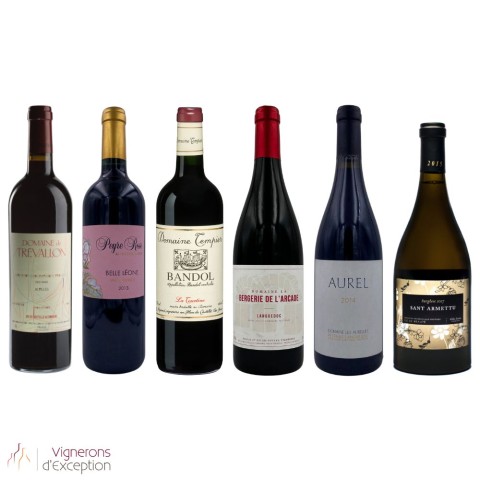
€93.33 / bouteille
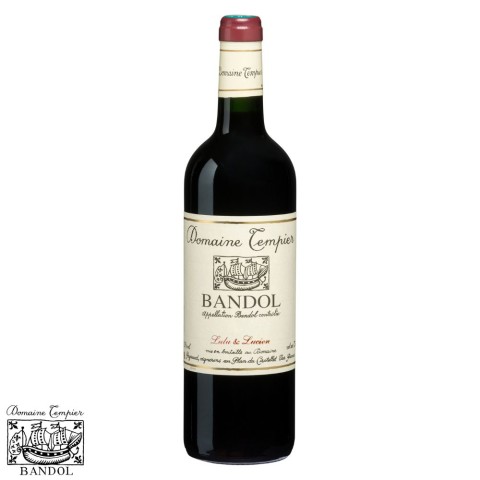
€39.00 / bouteille
€28.00 / bouteille
€63.00 / bouteille
€62.00 / MAGNUM
€43.00 / bouteille
€75.00 / bouteille
€32.00 / bouteille
€75.00 / bouteille
€31.00 / bouteille
€175.00 / magnum
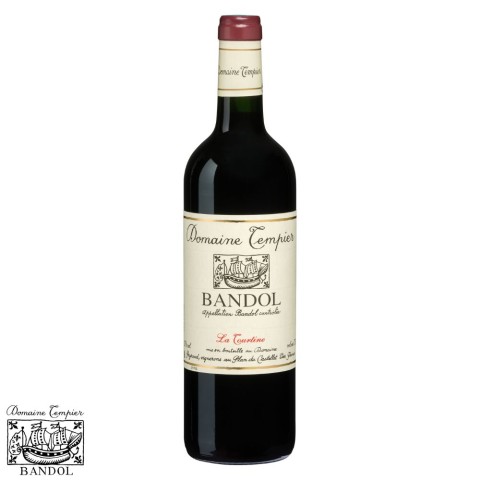
€175.00 / magnum
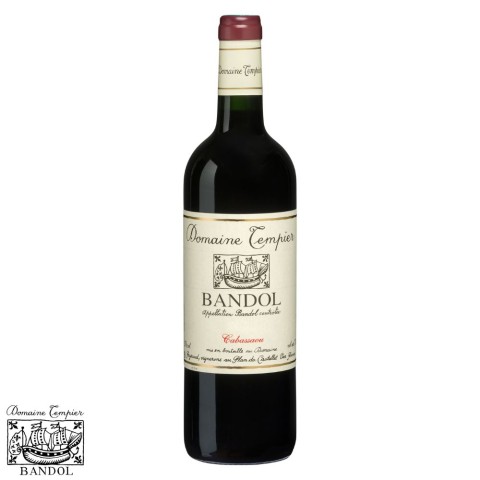
€120.00 / bouteille
€75.00 / bouteille
€43.50 / bouteille
€90.00 / magnum
€95.00 / magnum
€175.00 / magnum
€175.00 / magnum