 English
 Français

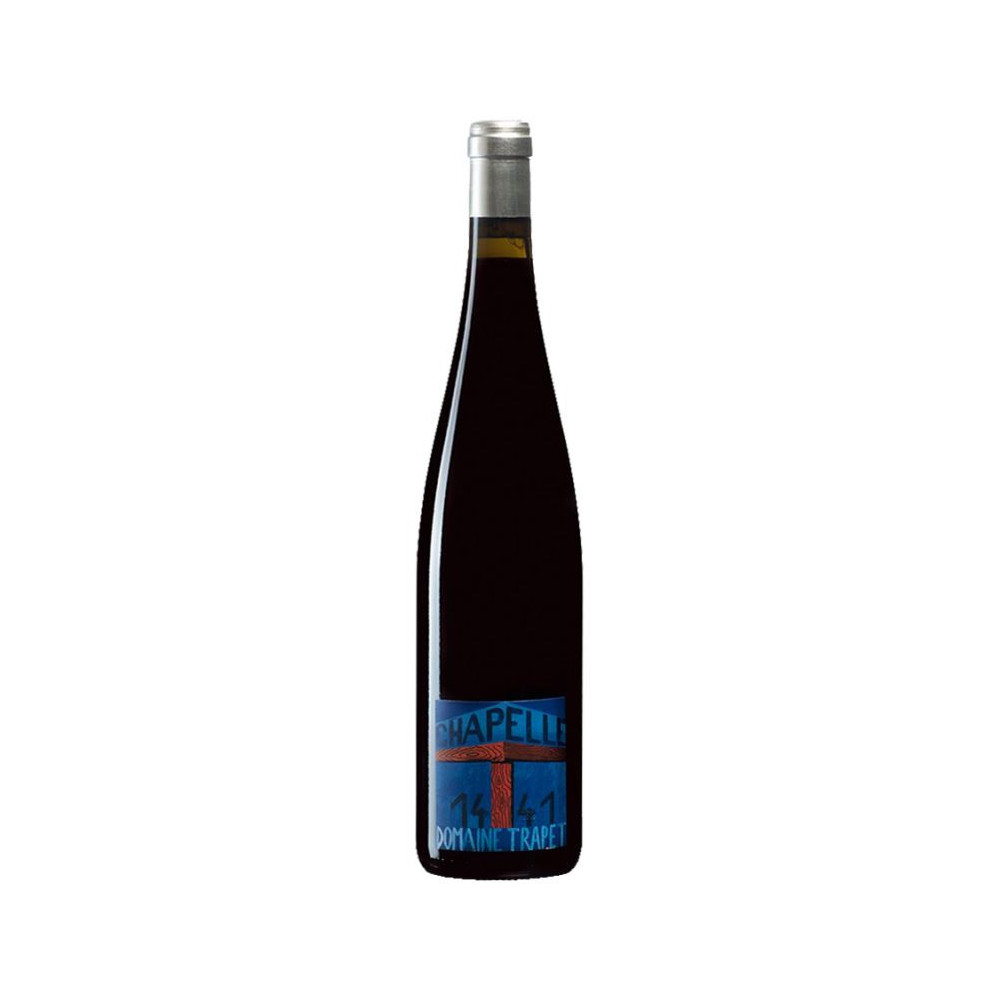
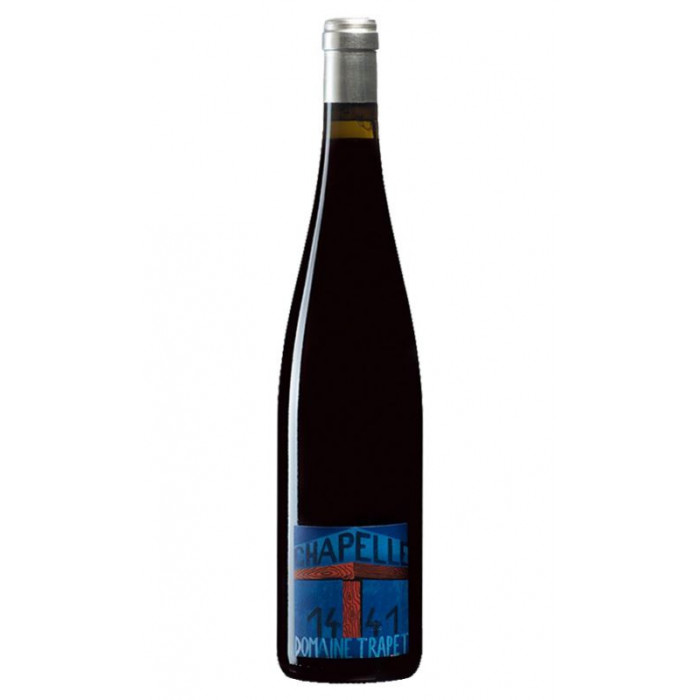
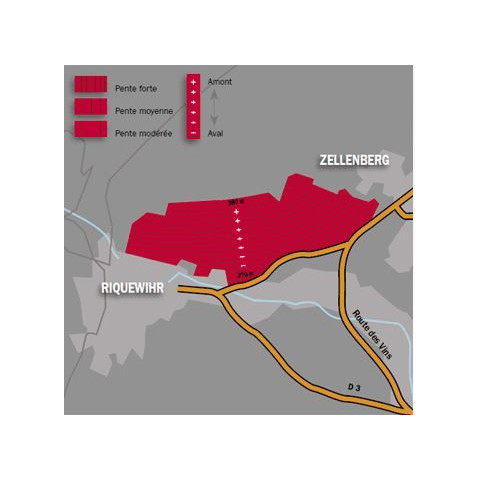
93/100 Reinhardt/Parker. All the expertise of the Trapet family in this concentrated pinot noir! The 2022 vintage is the result of a selection of the best terroirs of Riquewihr combined with the parcel "Les Froehn", located in the Grand cru of Zellenberg and composed of clay, limestone, and marl.
€29.00 / bouteille
 Everything is in stock
 Advice by phone or by email
 Delivery in continental France 20 €, free for orders over 400 €
Robert Parker's Wine Advocate (Stephan Reinhardt, February 2025): 93/100. From 60-year-old Burgundian massal selections and Chambertin vines with small berries on Zellenberg's limestone soils and aged in old Burgundian barrels and a 600-liter barrel, the 2022 Pinot Noir Chapelle 1441 opens with a deep, pure, fresh, intense and warm yet also coolish and spicy bouquet of ripe cherries and berries intermingled with iodine notes. Very elegant and fresh on the palate, this is a silky-textured, refreshing, savory and saline-finishing Pinot Noir with good intensity, mineral grip and tension. The tannins are neither sweet nor smooth but stimulating fresh and palate-cleansing. Pierre Trapet admits he wishes he would have picked the grapes a week later, but at the time, he listened to his father, Louis, who recommended picking the Pinots earlier. Pierre finds the tannins a bit rough today. 12.5% stated alcohol. Natural cork. Tasted at the domaine in April 2024. Drink date 2027-2050.
Technical sheet written by the domaine:
Tasting comment from the winemakers:
The nose is clear, pleasant, and of good intensity. There is a dominant presence of fruity aromas, red fruits, blackcurrant, cherry, and spicy notes, cinnamon. Aeration amplifies these aromas and reveals raspberry, flowers, rose, vanilla, as well as a hint of wood, licorice, and fine smoke. The aromatic profile is brilliant, precise, infused, and intoxicates the senses. In line with the vintage, it is captivated by a just and controlled aging.
The attack on the palate is slender, with balanced alcohol support. It evolves into a lively and sparkling mid-palate. The range of aromas from the nose is present, still dominated by red fruits, raspberry, cherry, blackcurrant, flowers, rose, grenadine, licorice, spices, cinnamon, and this fine smoky note. The woody tannin highlights a slight astringency. The finish presents great length, 11-12 caudalies, as well as a fine astringency and a clear liveliness. Elegant and bright, the balance reveals a masterful craftsmanship. The judicious extraction enhances the brilliance of the grape variety and confirms a style of great Alsatian red wine.
To be urgently paired with a roasted Bresse chicken, gratin dauphinois, a Rouennaise duck, a venison steak with cinnamon wine sauce, celery puree, and Granny Smith apple.
Serving temperature: 16°C.
Aging potential: To be enjoyed now (2024) and over 15 years.
The strength of the place: the church of Saint Erhard in Riquewihr.
It is on the oldest soil that Alsace finds its origin, its memory!
On these strong places with wonderful geological complexity, the first village groups are established.
For sure! The vine finds here, along the steep slopes, its ideal refuge. Riquewihr is a city steeped in History, a land of memory. In 2010, a friend architect undertook the restoration of a gem of Riquewihr's History, the old church of Saint Erhard. The act of conservation is undoubtedly not a trivial act for us winemakers. The origin of this desire indeed finds its source in the confused sensation that the place, just like the vine and the wine, is inscribed and finds its full meaning only in time, in exchange and solidarity.
1441: Consecration of the church of Saint Erhard built on the city walls!
Built on the walls dating back to 1291, this building was until around 1521, the chapel of the hospital of Riquewihr. A place of piety and human solidarity, this site is dedicated to Saint Erhard (an Irish monk who evangelized Bavaria in the 7th century), it was transformed, from the Reformation, into a boys' school and housing for teachers. From this time, an inscription remains on the lintel of a window, which calls to us: “Das Wort Gottes bleibt ewig”, the word of God remains eternal. What we learned later is that this verse from Isaiah (40:8), commonly resonant in such a place, was actually a rallying cry, a distinctive sign embroidered on the banners of the revolting peasants of 1525. The first treaty of solidarity: This large-scale uprising finds its origin in Luther's argumentation, who believes that the situation in which the peasants are forced has no biblical foundation: “God makes plants and animals grow, without human intervention and for all men...” From this tremendous wave of solidarity, in which nearly 300,000 peasants participated, was born the first treaty of mutual assistance reconciling both religious and social objectives.
From this time on, nothing will really be the same...
Today, many elements of this building remain, witnesses of a past that is both rich and fascinating. The inverted ship's hull framework is identical to that of the Hôtel-Dieu in Beaune, ours is two years its elder, but without cross beams and fortunately of much smaller dimensions...
But the most remarkable element is the fresco of the Last Judgment painted around 1500, of which unfortunately only hell remains! Many years will likely be needed for its restoration, but this place, when it regains all its splendor, will be open to you and will regain its vocation of hospitality... We want it to become the living witness of generations of winemakers, of their pains and joys. This refuge, finally, a tangible mark of our Alsatian belonging, so close, so intimate to this slope of Schoenenbourg, irresistibly leads us to the gates of Paradise!
Data sheet
Specific References
 Patrick B.

Not yet tasted (Translated review)
4 other products in the same category:
€59.00 / bouteille

€21.00 / bouteille
€20.00 / bouteille


€60.00 / bouteille


